
This page is a machine translation from Estonian, made with Claude (Anthropic AI). The working language of this site is Estonian; if the texts differ, the Estonian original applies. Eesti keeles
Information technologyThe movement of information, not just machines
For me, information technology means how information moves within an organisation. Someone writes down what happened, it moves to where it is processed, and the result reaches those who make decisions. Its tools are classifiers, priorities, forms and information flows. Machines are only one part of it, and in this sense programming is not information technology.
Contact
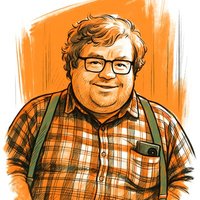
Tiit Lepik
Information technologist
Language: Estonian. I use machine translation for other languages.


tiit.lepik.71@gmail.com
https://lepik.co
Tehase tn 1, 74604 Kiiu, Kuusalu Parish, Harju County, Estonia
Google Maps: https://maps.app.goo.gl/8LxfQmDbNWSsSb476
By bus: stop “Kuusalu kool” (https://peatus.ee/), then about 1 km along the cycle and footpath.
Tickets: from the driver in cash or with the Ühiskaart card – https://pilet.ee/et/card-info.
Invoices: Ordinatim OÜ, registry code 14805167, Tehase tn 1, 74604 Kiiu, Estonia (not VAT registered)
My information technology
I acquired this way of thinking in the special mathematics and physics class of Rakvere Secondary School No. 1 in 1986–1989. An educational experiment was carried out with our year: mathematics was taught by Aleksander Levin, a lecturer at the Tallinn Polytechnic Institute, and one day a week we were at the computing centre. There I saw how data is collected, classified, processed and passed on. I still thank Levin for teaching me logical thinking.
Already at Võsu School I heard from a teacher that the calculator kills the mind and must not be used. Later I have seen that the same argument goes on around every new tool, be it writing, the printing press, the computer or artificial intelligence.
What interests me most is the place where a person meets the machine. The screen is not the goal but a channel: a message starts in one person’s head and reaches another person’s head. That is why my work has mostly been websites, mailing lists, live broadcasts and webcams.
Timeline
With the help of Claude I compiled a timeline of information technology from the first data carrier, tally marks about 40,000 years ago, to today’s language models. It has 108 entries in eight phases, and every entry has a picture, a year, a place and public sources. Four patterns emerge from the timeline that recur with every new data carrier: the flood, the super-profit, the loss of the trace and the reversal of roles.
Timeline from the first data carrier to artificial intelligence
IT Rotid
In 2010–2017 I was a co-founder and board member of IT Rotid. The company grew out of the live broadcasts of Viru Folk. We made live broadcasts of cultural events and Drupal-based websites, and advised Looduskalender on webcams. The stage sound, lighting and video solution for Starlight Cabaret, which I made together with Alo Jaanivald, is described on the Culture page.
Digital archives
From the IT Rotid years I kept a hobby of maintaining digital archives. For this I have three personal Synology machines with almost 100 terabytes of archives in total. They can no longer be accessed with a public link: I share access with friends through a Tailscale link.
Webcams
Since the second half of the 2000s I have been streaming live pictures from webcams (livestream). There have been cameras in Käsmu, on the roof of Hotel Viru, on top of the chimney of Kultuurikatel and elsewhere. For Looduskalender we made the Põlula fish camera.
I keep the Pühajärve camera on the roof of GMP Clubhotel running so that I have a reason to keep my finger on the pulse of this field.
Arvutustehnika ja Andmetöötlus
The magazine Arvutustehnika ja Andmetöötlus (“Computing and Data Processing”, 1987–1997, later A&A until 2011) stood on the shelf next to my bed in my school years. I am now organising the issues of the magazine into my own text corpus.
My system today
I organise my files, letters and registers as one system: everything has one place and every change has a log. I use the archival standard Records in Contexts (RiC) and AI tools such as Claude as ordinary tools. The motto of my company Ordinatim OÜ is “First order, then the machine.” Next to this page my weather station in Kiiu is also running.
Posts on this topic
My mailing list is in Estonian; the posts are listed here in their original language.
Loading posts…